News

Latest updates from the public health leadership front lines
Oct 25, 2021
by
SHLI Team
Dr. Satcher Awarded the 2021 Fries Prize for Improving Health

Dr. David Satcher, 16th U.S. Surgeon General and founding director of the Satcher Health Leadership Institute, received the 2021 Fries Prize for Improving Health for his outstanding achievements and lifetime commitment to eliminating health disparities and championing health equity.

Oct 20, 2021
by
SHLI Team
Daniel E. Dawes Appointed by the Biden-Harris Administration to the CDC’s Federal Advisory Committee

Daniel E. Dawes has accepted an invitation to join the Advisory Committee to the Director of the Centers for Disease Control and Prevention, which advises on policy and broad strategies to enable CDC to fulfill its mission of protecting national health and addressing health disparities.

Oct 18, 2021
by
SHLI Team
Daniel E. Dawes Elected to National Academy of Medicine Class of 2021

The National Academy of Medicine announced the election of Daniel E. Dawes to its membership, recognizing him as a national leader in health equity whose groundbreaking books have reframed policy conversations and led to actionable solutions.

Sep 16, 2021
by
SHLI Team
The Inaugural Garth N. Graham Distinguished Lectureship Award

The Satcher Health Leadership Institute, The University of North Texas Health Science Center, and YouTube announced the Inaugural Garth N. Graham Distinguished Lectureship Award, with the first award going to renowned public health expert Dr. David R. Williams.

Aug 3, 2021
by
SHLI Team
Violence is a treatable public health illness

Dr. David Satcher co-authored an opinion piece arguing that violence is something we can understand and prevent through a public health approach based on science, prevention focus, and collaborative work.

Jul 20, 2021
by
SHLI Team
INTERVIEW: New Fellowship Created To Address ‘The Root Cause’ Of Health Inequities Issues

Dr. Aletha Maybank and Daniel E. Dawes discuss the partnership between the American Medical Association and the Satcher Health Leadership Institute to create the Medical Justice in Advocacy Fellowship, designed to help physicians address the root causes of health inequities.

Jul 12, 2021
by
SHLI Team
Medical Justice in Advocacy Fellows Announced!

The American Medical Association and the Satcher Health Leadership Institute announced the selection of 12 physicians as the inaugural fellows for the Medical Justice in Advocacy Fellowship, which will empower physician-led advocacy to advance health equity.

Jun 23, 2021
by
Allyson S. Belton, MPH
Honoring Juneteenth

SHLI reflects on the significance of Juneteenth becoming a federal holiday, noting that while this recognition marks a cultural shift, continued work is needed to educate, inform, and change policies to break down systemic barriers to equity.

Apr 26, 2021
by
SHLI Team
Variation in Reporting of the Race and Ethnicity of COVID-19 Cases and Deaths Across US States: April 12, 2020, and November 9, 2020

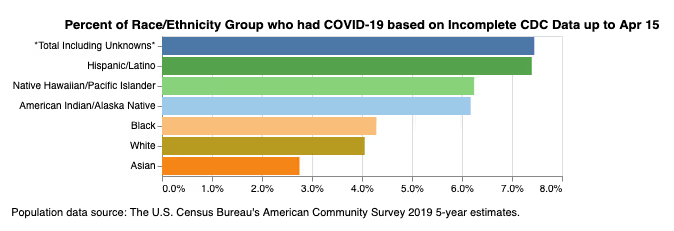
This research study analyzed changes in state reporting of COVID-19 data by race/ethnicity between April and November 2020, revealing significant gaps in data collection that prevent a true accounting of the pandemic's impact on racial/ethnic minority communities.

May 20, 2022
by
SHLI Team
Health Equity Tracker Wins Title of "Best Health Initiative" at Halo Awards 2022

The Satcher Health Leadership Institute and Google.org received two Halo Awards for their Health Equity Tracker, winning Gold for "Best Health Initiative" and Silver for "Best COVID-19 Initiative" at the 2022 ceremony.

Feb 22, 2022
by
Laurie Zephrin, MD, Vice President, Commonwealth Fund
We Still Need Both Data and Input to Understand Where We are With Vaccine Hesitancy

Highlights findings from the American COVID-19 Vaccine Poll on vaccine uptake among communities of color, emphasizing the need for quality data to address hesitancy.

Jan 25, 2022
by
SHLI Team
Behavioral Health Data Added to Health Equity Tracker

The Health Equity Tracker has expanded to include a new "Behavioral Health" category with five indicators: Frequent Mental Distress, Depression, Suicide, Opioid and Other Substance Misuse, and Alcohol Use, helping to address significant disparities in mental and behavioral health outcomes.

Nov 12, 2021
by
Pierluigi Mancini, PhD
How To Include The Social Determinants That Impact Behavioral Health In A Health Equity Tracker

Explores how social determinants like racism, stigma, and lack of culturally competent services contribute to behavioral health disparities during COVID-19.

Nov 11, 2021
by
Google.org HET Team
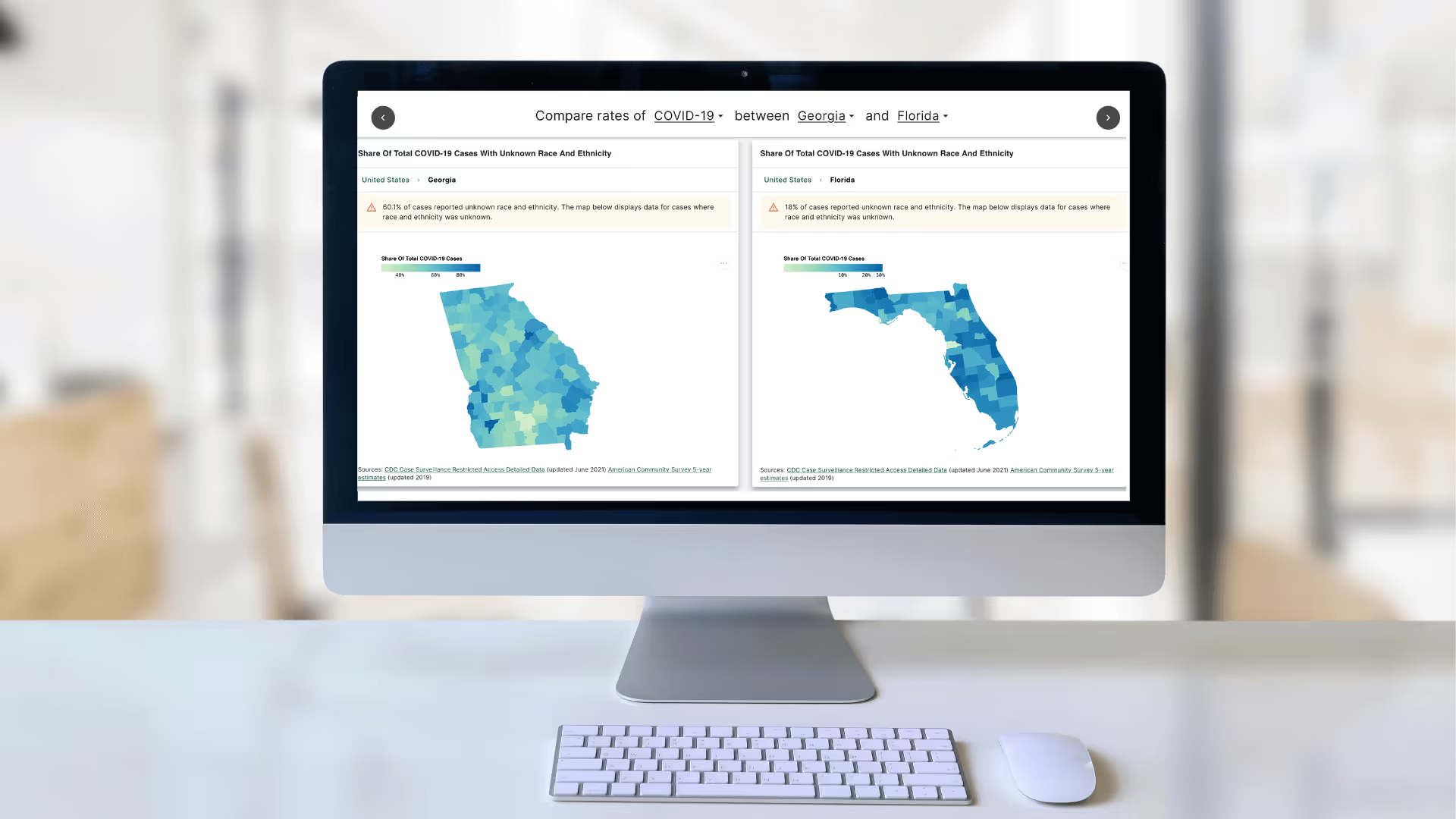
How complete are the CDC's COVID-19 Case Surveillance datasets for race/ethnicity at the state and county levels?

Evaluates the completeness of CDC COVID-19 datasets as a replacement for the Covid Tracking Project, comparing case counts and race/ethnicity data availability.

Oct 12, 2021
by
SHLI Team
COVID-19 Vaccination Data added to SHLI'S Health Equity Tracker

The Satcher Health Leadership Institute's Health Equity Tracker has launched vaccination data as part of its most recent update, highlighting underlying factors contributing to vaccine hesitancy and inequitable vaccine access for historically marginalized communities.

Oct 5, 2021
by
SHLI
Insights into health equity after COVID-19

Dr. David Satcher and Daniel Dawes reflect on how the COVID-19 pandemic highlighted disparities in healthcare access and exacerbated health inequities, particularly for Black Americans who have lost about three years of life expectancy during the pandemic.

Aug 23, 2021
by
Coleen A. Boyle, PhD
Why It Matters That Information On Race, Ethnicity, Gender, And Disability Are Measured Accurately And Completely

Explains how the Affordable Care Act mandated standardized demographic data collection to identify health inequities, and why emergency situations like COVID-19 often result in incomplete reporting.

Aug 23, 2021
by
Kyle R. MacDonald, Danielle Barrasse, and Myrela Bauman
How can we use data to inform practices to advance health equity?

Discusses balancing data collection with community needs, urging public health professionals to examine internal biases while using data responsibly to advance equity.