SHLI
Program
Medical Justice in Advocacy Fellowship
The Medical Justice in Advocacy Fellowship is a collaborative educational initiative to empower physician-led advocacy that advances optimal health for all people and communities.

AMA-SHLI Medical Justice in Advocacy Fellowship
Applications now open! Read more on how to apply.
Program purpose
The AMA-SHLI Medical Justice in Advocacy Fellowship is a collaborative educational initiative to empower physician-led advocacy that advances optimal health for all people and communities.
The fellowship, created by the American Medical Association (AMA) in collaboration with the Satcher Health Leadership Institute (SHLI) at Morehouse School of Medicine (MSM), mobilizes physicians to be part of the next generation of advocacy leaders, driving meaningful policy changes that produce optimal health outcomes in the communities they serve.
Apply to become a fellow
Join the fourth cohort of physicians committed to optimal health outcomes.
Deadline was Friday, March 16, 2026, at 11:59 p.m. Eastern Time.
About the Fellowship
The AMA-SHLI Medical Justice in Advocacy Fellowship is a unique, first of its kind post-doctoral fellowship designed to enhance physicians’ advocacy leadership skills to improve health outcomes in the areas they serve or may serve.
Using a unique learning framework, the fellowship will provide a mentoring and training platform that will equip participants with the foundational skills, tools and knowledge to engage in health advocacy. This will involve exploring several critical topic areas, including:
· Upstream (action-based) models of advocacy that address social drivers of health
· Cultural and historical analysis of the production of health outcomes
· Sector and resource engagement required to improve community health and well-being
Program eligibility
The fellowship is open to all physicians and residents who have a demonstrated interest in optimal health outcomes and health advocacy.
Note: Internships and graduate assistantships will not count towards the professional experience requirement.
Fellowship dates
Cohort 4 runs from September 2026 – November 2027.
Fellowship requirements
Fellows participate in a three (3)-day, in-person learning intensive at the beginning of the fellowship and subsequently engage in monthly learning sessions with a multidisciplinary, multisectoral group of nationally-renowned experts, scholars, researchers and current and former policymakers across all levels of government.
Monthly sessions will be held virtually with three (3) in-person learning experiences scheduled during the fellowship.
Note: In-person experiences are subject to change depending on extraneous factors impacting travel and large in-person gatherings.
Taking a sabbatical is not required during the fellowship. AMA membership is encouraged but not required for the fellowship. AMA membership is not a factor in application review or acceptance to the fellowship.
Required convenings, meetings and anticipated time commitment
Virtual instructional webinars/meetings
- Frequency: Every third Friday of the month from 12:00pm - 2:00 p.m., Eastern Time
- Monthly convening from Oct. 2026 – August 2027
Note: On months when there are in-person convenings, fellows will not meet virtually for that month.
Full day, in-person commitments
- Fall 2026 (Dates TBA): Inaugural Convening for Fellows/Three(3)-day Fellowship Intensive (Atlanta, GA)
- February 2027: Convening Fellows for AMA National Advocacy Conference (Washington, DC)
- June 11-15, 2027: Convening Fellows for the AMA House of Delegates Annual Meeting (Chicago, IL)
- Nov. 12-15, 2027: Convening Fellows for the AMA House of Delegates Interim Meeting, Capstone Project Presentations, and Graduation for Fellows (Chula Vista, CA)
Monthly capstone project and learning session preparation effort
- Approximately 3 to 6 hours monthly for class preparation (i.e. readings, group work, etc.) and project development & implementation, all completed on your own time.
- Monthly office hours offered for capstone project support and general communications support
Stipend and CME credit
Fellows will receive a stipend of $15,000* for their participation in the program and would be eligible for CME credit hours.
*Note: Receipt of full stipend is contingent upon program participation and completion.
The Morehouse School of Medicine designates this live activity for a maximum of up to 13.75 AMA PRA Category 1 credit (s) ™**. Physicians should only claim credit commensurate with the extent to their participation in the activity.
**The Morehouse School of Medicine is accredited by the Accreditation Council for Continuing Medical Education to provide continuing medical education for physicians. Total credit amount contingent upon review.
Program benefits
- Engagement with like-minded professionals to generate and exchange solutions towards more equitable and healthier communities.
- Connection with experts and leaders for learning and mentorship opportunities.
- Flexible, blended learning solutions that may be incorporated into the clinical schedule.
- Knowledge and skill development to establish better trust among patients and serve as patient advocates.
- Partnership with AMA and SHLI on their respective commitments to address health inequities through a social justice lens.
Application process
If you seek to advance health advocacy in your community, apply for the fellowship. The fellowship is an open competition. The application process is currently open and closes March 16, 2026. To be considered, all required documents must be submitted and received by the indicated deadline.
Application package
An application package includes:
- An online application with professional profile, candidate interest short-essay and demographic profile questions
- Curriculum vitae (CV)
- Three (3) recommendation forms* from professional leaders, community-based leaders and organizers and others with demonstrated knowledge/experience of the applicant’s efforts towards advancing optimal health outcomes
*Note: After the applicant’s application and references are received, AMA-SHLI will send a recommendation form via e-mail to the references listed. All forms must be completed by the recommender for the application to be complete. Recommendations are due April 10, 2026, at 11:59 p.m. Eastern Time.
Application essay questions
There are four (4) essay sections as part of this application. The questions are noted here for reference, should the applicant prefer to work on this prior to the final application submission.
- Describe (in detail) the community in which your primary practice is located and tell us about the patient population that you serve. [150-250 words]
- Provide one detailed example of how your previous training experience has affected your current practice. [250words]
- Describe one specific way that you feel your participation in this fellowship could have an impact on your ability to serve the community(ies) in which you work. [250 words]
- How has your experience influenced your practice of medicine and decision to practice medicine? [250 words]
Full application packets were due by Friday, March 16, 2026, at 11:59 p.m. Eastern Time.
Recommendation forms are due by April 10, 2026, at 11:59 p.m. Eastern Time.
A committee of leaders from AMA and SHLI will review the application packets and select the finalists. Finalists will then be invited for a virtual interview with AMA and SHLI leaders and key partners.
View the 2024 – 2025 cohort
Learn more about the ten outstanding physician leaders of the third cohort of the AMA-SHLI Medical Justice in Advocacy Fellowship.
Contact
For additional information regarding the fellowship, please contact shlifellowship@msm.edu
Focus areas
Priorities
Political Determinants of Health
We examine how the structural distribution of resources, power, and opportunities shapes health outcomes, recognizing that political determinants create social drivers that significantly impact health equity.
People
Team
Fellowship
Fellows
Cohort 3

MD
Makunda Abdul-Mbacke, MD, is a practicing obstetrician-gynecologist, founder and CEO of Piedmont Preferred Women's Healthcare, and attending physician at UNC Rockingham Hospital. She has dedicated her career to the improvement of women’s health and is deeply committed to addressing increasing rates of maternal morbidity and mortality in low resource communities.
MD
Sonia Eden, MD, is a board-certified neurosurgeon. She is passionate about health equity and is a founding member of the American Society of Black Neurosurgeons, where she also serves as President. Dr. Eden is an Aspen Institute health fellow and continually performs health equity research in the neurosurgery space.

MD
Stephanie Eng, MD, is an assistant professor of psychiatry at Weill Cornell Medicine. As a resident, she became interested in providing care to urban, underserved populations experiencing various systems of inequity that increased their psychological morbidity and mortality. Her research focuses on the effects of implicit bias on clinical decision-making.

MD
Christina Gomez-Mira, MD, is a family medicine primary care provider and medical director of two rural clinics at a Federally Qualified Health Center. She is working to address inequities through collaboration with Latine leaders and community organizations to address health and substandard housing for the Latine/farm worker community.
MD
Felisha Gonzalez, MD, is an emergency medicine resident at Boston Medical Center with an interest in how patient identity impacts health outcomes. Her research focuses on the impact of race and other social identities on restraint use for patients within the emergency department and bias in evaluation of medical students.

MD
Salmaan Kamal, MD, is a fellow at the University of California, Los Angeles National Clinician Scholars Program, a fellowship committed to addressing the largest inequities in the U.S. health care system. He is passionate about improving care for people with a history of incarceration, homelessness and substance use disorder.

MD, FAAFP
Allana Krolikowski, MD, FAAFP, is the chief medical officer for Jericho Road Community Health and clinical assistant professor in family medicine at the University at Buffalo. Her work focuses on comprehensive primary care, maternal child health and health care capacity building to advance health equity and access in under-resourced global communities.
MD
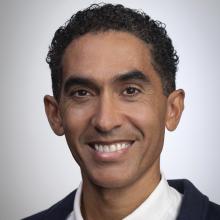
Surya Pierce, MD, is an associate professor of family and community medicine at the University of New Mexico School of Medicine. In addition to teaching a wide variety of learners, his professional interests include the intersection of contemplative practices (such as meditation), medicine and social justice.

MD, PhD
Whitney Stuard Sambhariya, MD, PhD, is an ophthalmology resident at the Wilmer Eye Institute at Johns Hopkins Hospital. She is passionate about advancing equity through policy and research. She recently advocated for a review of current FDA policy that prevents men who have sex with men from donating corneal tissue.
MD, MPH
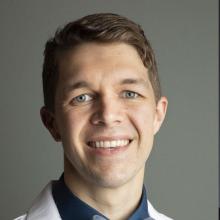
William Weber, MD, MPH, is an assistant professor of emergency medicine at Rush University Medical Center. He helped found the Medical Justice Alliance, a national organization that trains volunteer physicians to provide medical reviews to advocate for the health of individuals in carceral settings.
Cohort 2
MD, CMQ, MPH
Kedren Vaccines
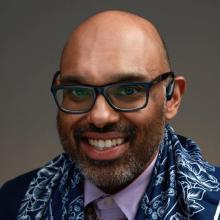
Jerry P. Abraham, MD, CMQ, MPH, advocates for equal access to health care for all people across Los Angeles. As the director and chief vaccinologist of Kedren Vaccines + Kedren Mobile, Dr. Abraham has fought for minoritized groups’ right to reliable and nondiscriminatory treatment by breaking down institutional barriers that keep underserved groups from receiving care.

MD
Cook County Health
Dhara Amin, MD, is an innovative health justice advocate. As the director of quality improvement and patient safety for the department of emergency medicine, Dr. Amin offers safety strategies to the care of patients served by one of the largest safety net hospitals in the United States.

MD
Indian Health Service
Nadia Norton Anspach, MD, is a member of the Diné (Navajo) Nation and is dedicated to serving Native American communities. As a family medicine physician for the Indian Health Service in a rural Arizona hospital, Dr. Anspach has treated everything from trauma to caring for inpatients, outpatients and delivering babies.

MD, MPH
Yale Child Study Center/Yale School of Medicine
Amanda Calhoun, MD, MPH, is an adult/child psychiatry resident at Yale Child Study Center/Yale School of Medicine, focused on research into the effects of anti-Black racism on children and adolescents and racism within the medical system. Dr. Calhoun has published and appeared on national news discussing medical racism and Black youth suicide.
MD
Santa Clara Valley Medical Center
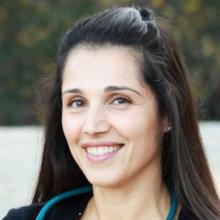
Amna Khan, MD, is an outpatient pediatrician at Santa Clara Valley Medical Center in San Jose, California, and a clinical instructor at Stanford University School of Medicine Department of Pediatrics. Dr. Khan guides families collaboratively towards health and well-being by providing excellent, culturally compassionate medical care delivered through an equitable, anti-racist framework.

MS, MD
Premier Medical Group, LLC
Greta Manning, MS, MD, is a board-certified family medicine physician in Tennessee. After the death of Dr. Manning’s mother to renal disease, Dr. Manning founded ORA’s Alliance. Through community education, ORA’s Alliance raises awareness around and advocates for lasting change in the care and treatment of kidney disease.

MD, MPH
Tulane University School of Medicine
Anjali Niyogi, MD, MPH, is an associate professor of internal medicine and pediatrics at the Tulane School of Medicine, an adjunct assistant professor at the Tulane School of Public Health and a professor in social entrepreneurship at the Phyllis M. Taylor Center. Dr. Niyogi’s work focuses on the health of incarcerated and formerly-incarcerated persons.
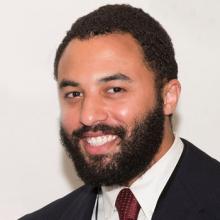
MD
Seattle Children's Hospital/University of Washington
Hannibal Person, MD, is an assistant professor of pediatrics at the University of Washington School of Medicine in the division of gastroenterology and hepatology at Seattle Children’s Hospital. Dr. Person is the director of the Gut-Brain Health Program, researching educational interventions to mitigate anti-Black racism in health care practice.

MD, MPH
Icahn School of Medicine at Mount Sinai
Richard Silvera, MD, MPH, investigates how HPV-related disease affects people living with HIV; specifically, how genomic technology can improve diagnosis of pre-cancerous lesions. This is important because Dr. Silvera’s research has found that Black patients are less likely to complete current screening protocols; therefore, new screening technologies may help address this inequity.
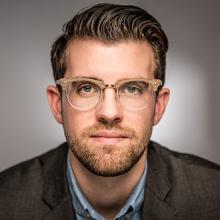
MD, MPH
Boston Medical Center
Carl Streed Jr., MD, MPH, is an assistant professor at Boston University School of Medicine and the research lead for the Center for Transgender Medicine and Surgery at Boston Medical Center. As a clinician-investigator, Dr. Streed focuses on improving the health and well-being of sexual and gender minority individuals and communities.

MD, MPH
CMS/HHS
Tiffany Wiggins, MD, MPH, is a medical officer with the Centers for Medicare & Medicaid Services (CMS) and maternal health advisor across the U.S. Department of Health and Human Services (HHS). Dr. Wiggins leverages this expertise as an obstetrician-gynecologist and preventive medicine physician to advance population health, with a focus on achieving maternal health equity.
Cohort 1
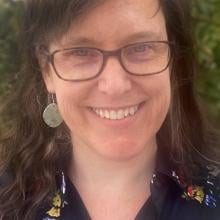
MD, MPH, SFHM, MACP
University of New Mexico
Eileen Barrett, MD, MPH, SFHM, MACP, is an associate professor of medicine and director of continuing medical education at the University of New Mexico. She is a multi-state district chair and past president of the New Mexico chapter of the Society of Hospital Medicine, and in 2020 received the chapter’s Physician of the Year Award.

MD
University of Alabama at Birmingham
Amber Clark, MD, is an assistant professor in the department of Physical Medicine and Rehabilitation (PM&R) at the University of Alabama at Birmingham (UAB). She also works as a stroke consult physiatrist where she diagnoses and treats acute rehabilitation needs. Her work focuses on how intersectionality of disability and disparities creates more disparate circumstances.
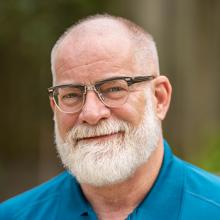
MD
Louisiana State University Health Science Center
Charles Calvin Coleman, MD, works at the Louisiana State University Health Science Center in New Orleans as a full-time associate professor in psychiatry. His work focuses on supporting families of children with developmental disabilities and providing community-based psychiatric services, as well as studying the impact of social determinants on the psychiatric diagnostic process and treatment selection.

MD, MPL
Harbor UCLA Family Medicine
Lorenzo Antonio Gonzalez, MD, MPL, is the chief resident for Harbor UCLA’s Family Medicine Residency and also serves as the Southern California vice president for the Committee of Interns and Residents (CIR-SEIU). His interests are in the impact of the built environment on chronic diseases, equitable affordable housing and economic development.
MD
Kaweah Health
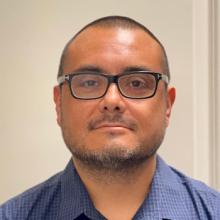
Omar Guzman, MD, a board certified emergency medicine physician, serves as a core faculty member for the Kaweah Health Emergency Medicine residency program and is the director of undergraduate medical education at Kaweah Delta Health Care District. His interests are in addressing the social determinants of health through community engagement and advocacy.

MD
Los Angeles County Medical Hub Clinics
Kamaal Jones, MD, is a class of 2021 graduate from the Stanford Pediatrics residency program. Dr. Jones will be continuing his focus on health equity work as he transitions to serving as a pediatrician for children in the foster-care and child welfare system in LA County’s High Desert Regional Health Center Hub clinic.
MD, MSPH, FACOG
FOLX Health, Inc.
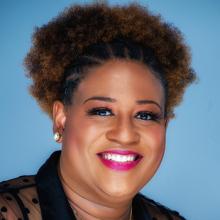
Kameryn J. Lee, MD, MSPH, FACOG, is the vice president for medical affairs and health equity at FOLX Health, a telehealth company that focuses on competent and affirming queer and trans health care delivery. Dr. Lee’s practice has focused on advanced laparoscopic and hysteroscopic surgery for multiple conditions, and transgender medicine.

MD, MPH
Cook County Health
Melissa Palma, MD, MPH, is currently a family medicine and preventive medicine resident at Cook County Health in Chicago, Illinois. She is a physician mentor and research and education co-chair with the Council of Young Filipinx Americans in Medicine. Additionally, she also serves as the medical and public health advisor for TayoHelp.com, a culturally-tailored COVID-19 resource for Filipinx/a/o Americans available in English and Tagalog.

MD, FACRO, FASTRO
Genentech/Sutter Health
Shilpen Patel, MD, FACRO, FASTRO, is a radiation oncologist and is a principal medical director at Genentech, where he serves as the health equity and inclusive research director. He currently serves on the board of the Horizons Foundation, Phi Chi Medical Foundation, the board of Radiating Hope and the board of RAD-AID International.

MD, MHA
University of Mississippi Medical Center
Avani K. Patel, MD, MHA, is currently a psychiatry resident physician at the University of Mississippi Medical Center with plans to pursue a child and adolescent fellowship in the future. Dr. Patel is a passionate mental health advocate who is committed to breaking down barriers to provide optimal health for all.

MD, MPH, MS
University of Pittsburgh/Children's Hospital of Pittsburgh of UPMC
Maya Ragavan, MD, MPH, MS, is an assistant professor of pediatrics at the University of Pittsburgh and is a general pediatrician and health services researcher. She uses a community-based participatory research approach, with inclusion of community partners as research co-creators. She also has been involved with community-partnered vaccine equity work in Pittsburgh.

MD, MPH, MSCS
Central Arkansas Veterans Healthcare System
Ramona Rhodes, MD, MPH, MSCS, is associate director for Health Services Research for the Geriatric Research, Education and Clinical Center of the Central Arkansas Veterans Healthcare System and associate professor in the Department of Geriatrics at the University of Arkansas for Medical Sciences. Her research centers on advance care planning, access to hospice and palliative care utilization for the underrepresented and underserved.
Part of
Satcher Health Leadership Institute