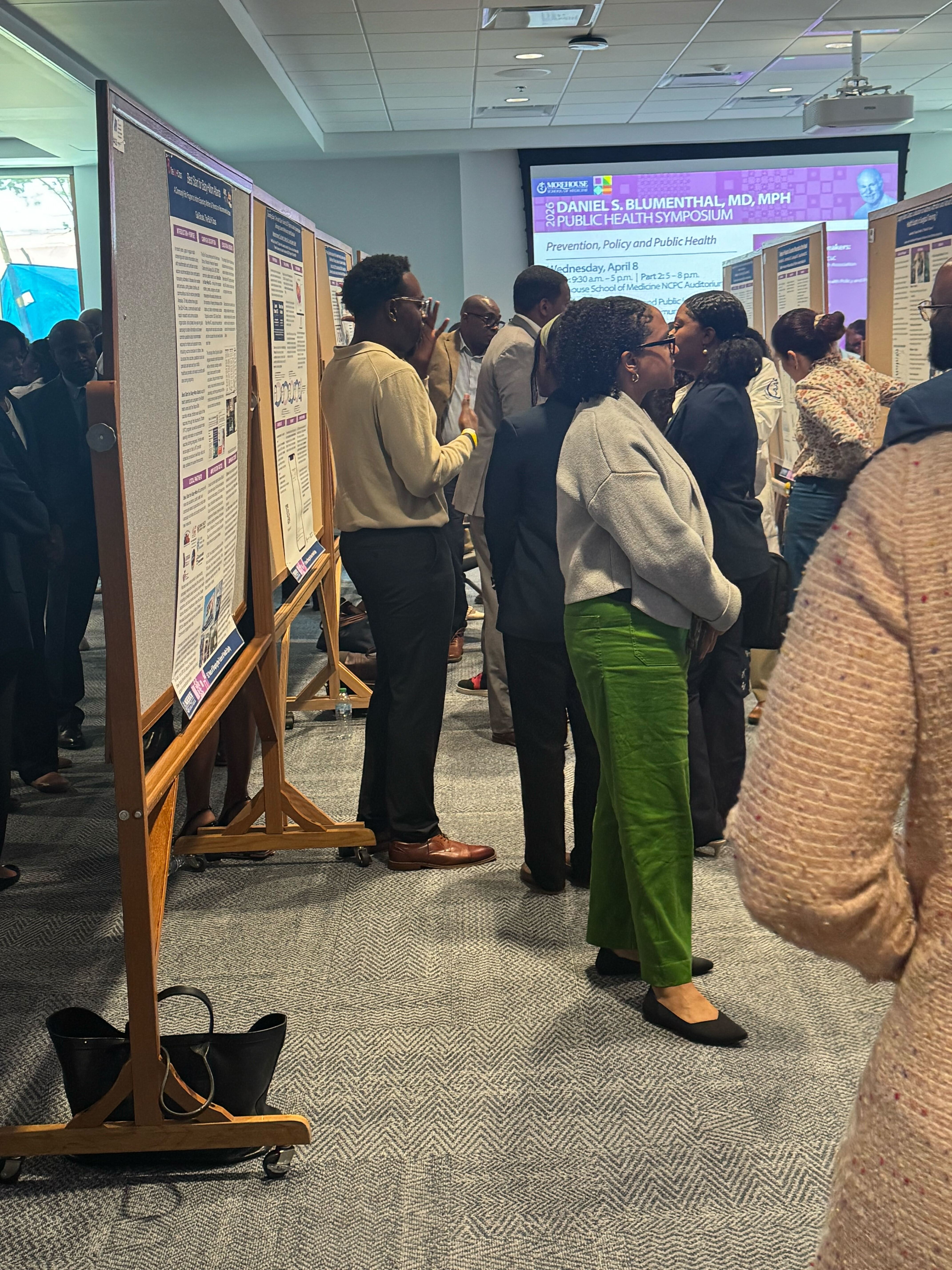
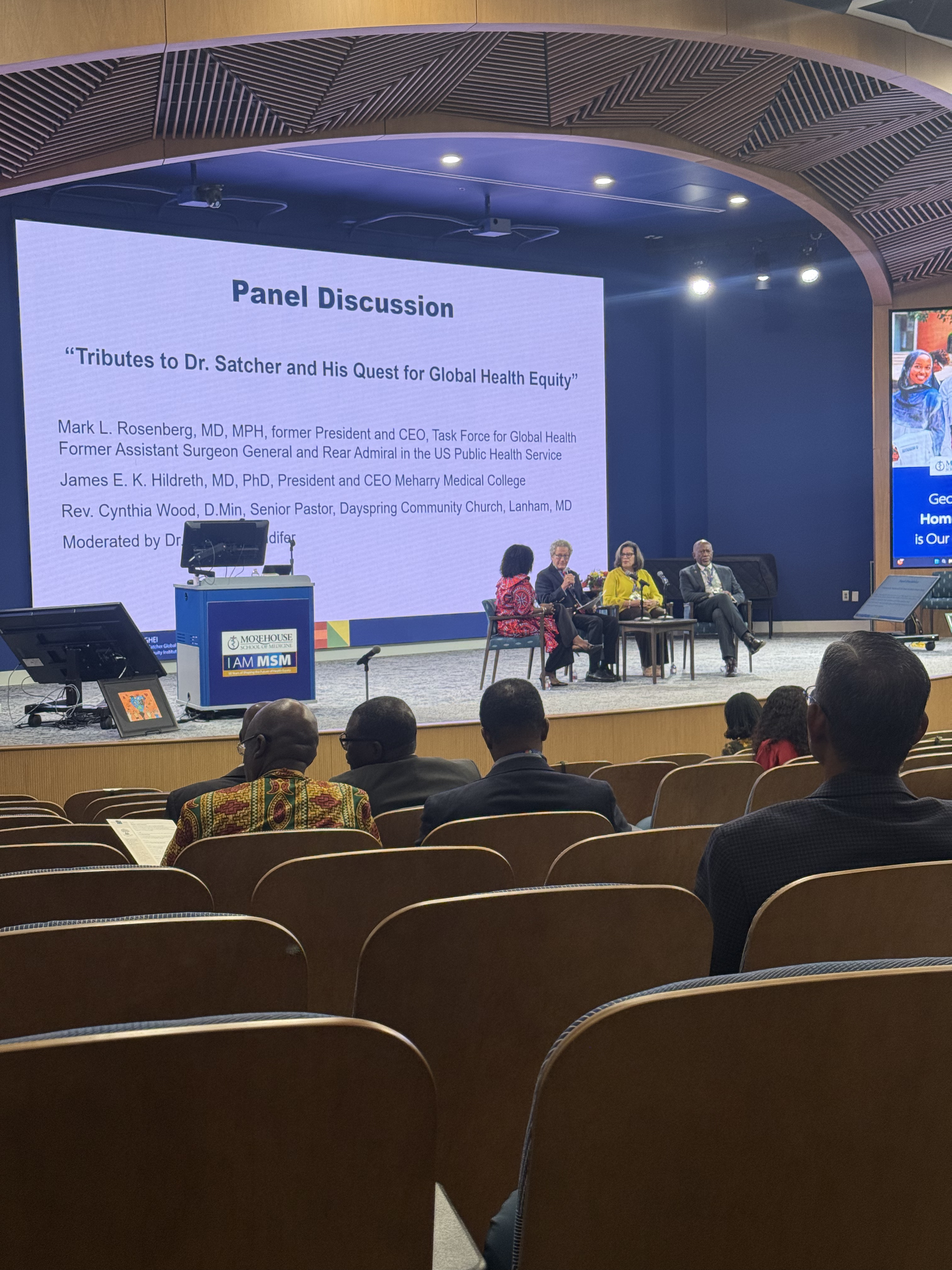
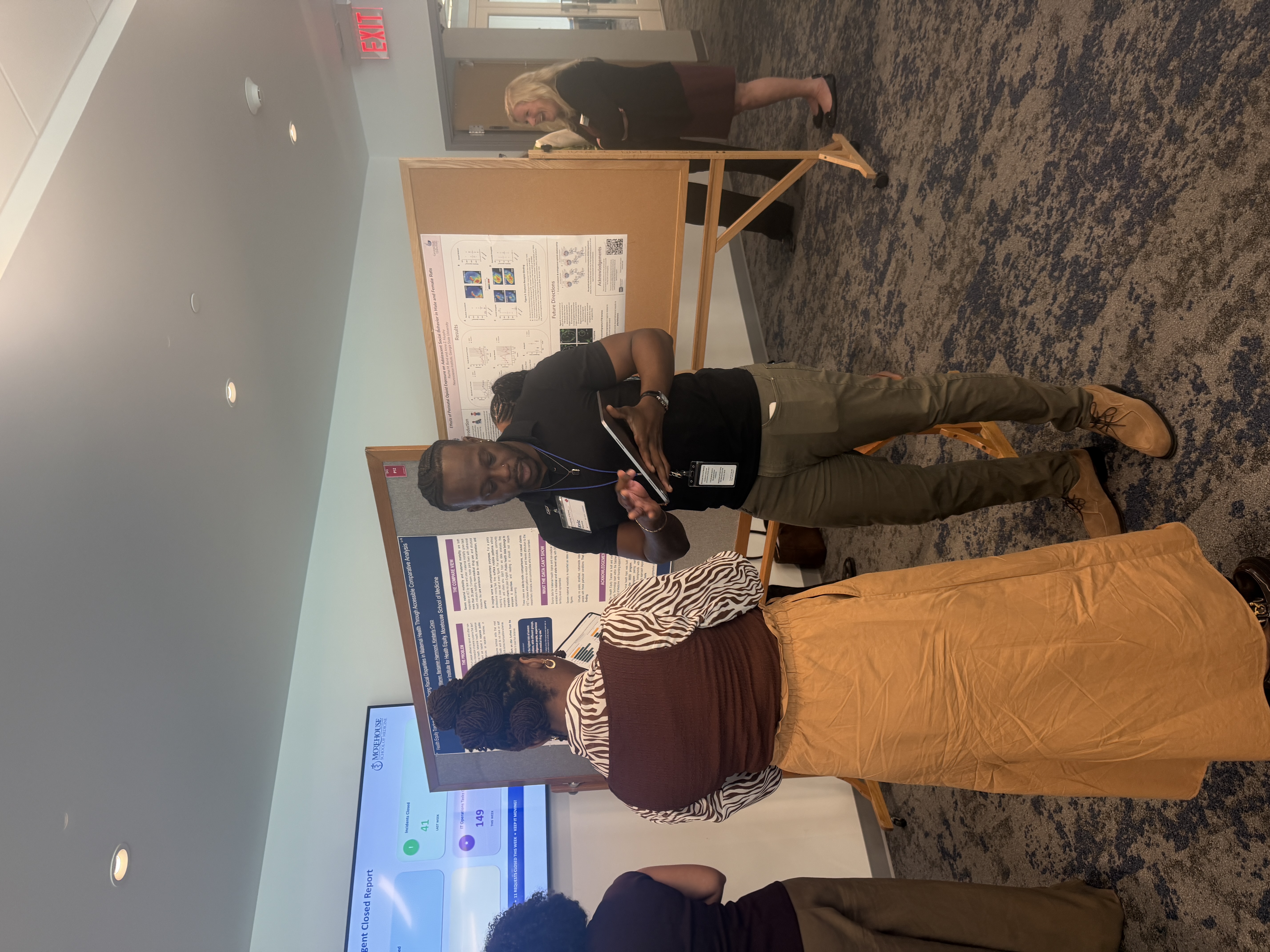
On April 8th, I had the opportunity to present our work at the Daniel S. Blumenthal, MD, MPH Public Health Symposium, hosted right here at Morehouse School of Medicine. The symposium, themed Prevention, Policy, and Public Health: The Intersections Shaping Community Health, brought together public health professionals, researchers, community leaders, students, and advocates from across the region for a full day of engaging conversation with powerful keynotes and meaningful community connection.
One of the most energizing parts of the day was hearing from Dr. Nandi A. Marshall, DrPH, President of the American Public Health Association (APHA). Her message hit home: in a moment when so much feels uncertain for public health, we have to keep showing up. She reminded the room that every job is a public health job — and that community must be at the center of any effort to improve health outcomes. She also spoke about the importance of weaving public health education into K–12 curricula, which really resonated with me; it was exactly the kind of grounding I needed to hear.
After the presentation, I had the chance to introduce Dr. Marshall to my sister, Sharia Warren, an assistant principal at Irmo Middle School in Irmo, SC, who had attended the symposium with me. It turned into one of those conversations you don't plan but that end up being the highlight of your day. Dr. Marshall spoke directly with Sharia about how she could incorporate existing public health curricula into her school's programs — practical, actionable guidance for a school leader who's already thinking about the health of her students and community. Sharia left the conversation feeling genuinely inspired, and honestly, so did I. Moments like that are a reminder of why public health can't just live in conference rooms and journals; it has to reach the schools, the communities, and the people doing the work every day.
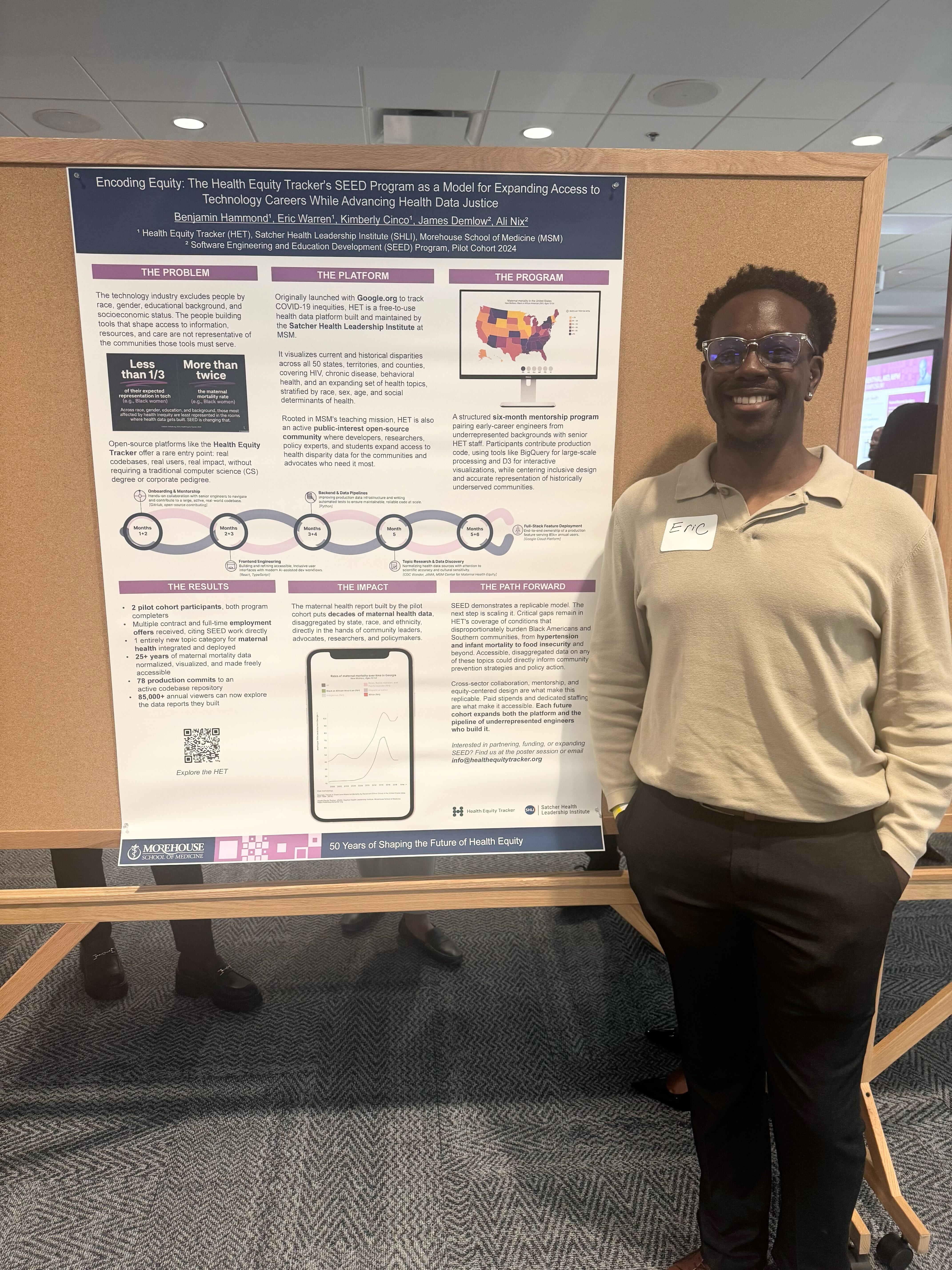
I was there representing the Health Equity Tracker (HET) and our Software Engineering and Education Development (SEED) program. The poster session was genuinely one of my favorite parts of the day. We had the chance to share how SEED is working to expand access to tech careers for engineers from underrepresented backgrounds while simultaneously advancing the HET's mission of making health disparity data freely accessible to everyone who needs it.
What made the session especially meaningful was who stopped by to engage with us: Morehouse School of Medicine students. They were curious, thoughtful, and excited, asking real questions about how they could get involved, not just as passive users of the Tracker, but as advocates, educators, and future contributors. The conversations touched on everything from using the HET to educate communities about health disparities to driving policy change and increasing minority representation in the tech workforce. That's exactly the kind of energy this work is meant to generate.
Being at the Blumenthal Symposium as a software engineer in public health always reminds me of something important: the technology we build doesn't exist in a vacuum. It lives in the same world as the communities it's meant to serve. When students, clinicians, and community health workers engage with what we've built and start imagining how they'd use it, that's when I know the tool is actually working.
The HET isn't just a data platform, and SEED isn't just a mentorship program. Together, they represent a belief that equity-centered technology, built by and for the communities most affected by health disparities, is one of the most powerful tools we have.
Health Equity
HET Updates
Data & Technology
Events
Social Determinants of Health
.jpg)