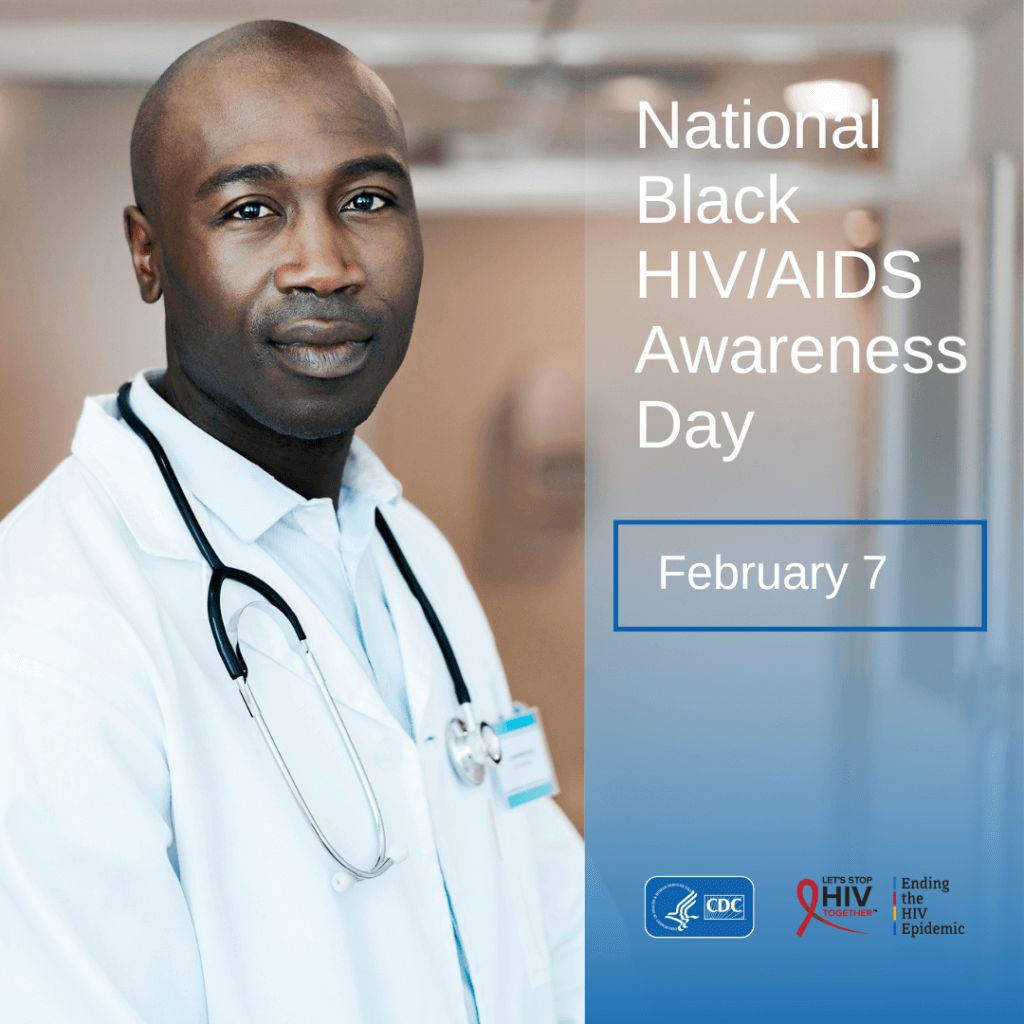
According to the Centers for Disease Control and Prevention (CDC), in 2019 there were over 36,500 persons aged 13 years and older in the United States (U.S.) diagnosed with HIV. Blacks/African Americans represented almost 15,500 of the cases reported. In other words, Blacks/African Americans represent an estimated 42% of the newly reported HIV diagnosed cases despite comprising only 12% of the U.S. population.
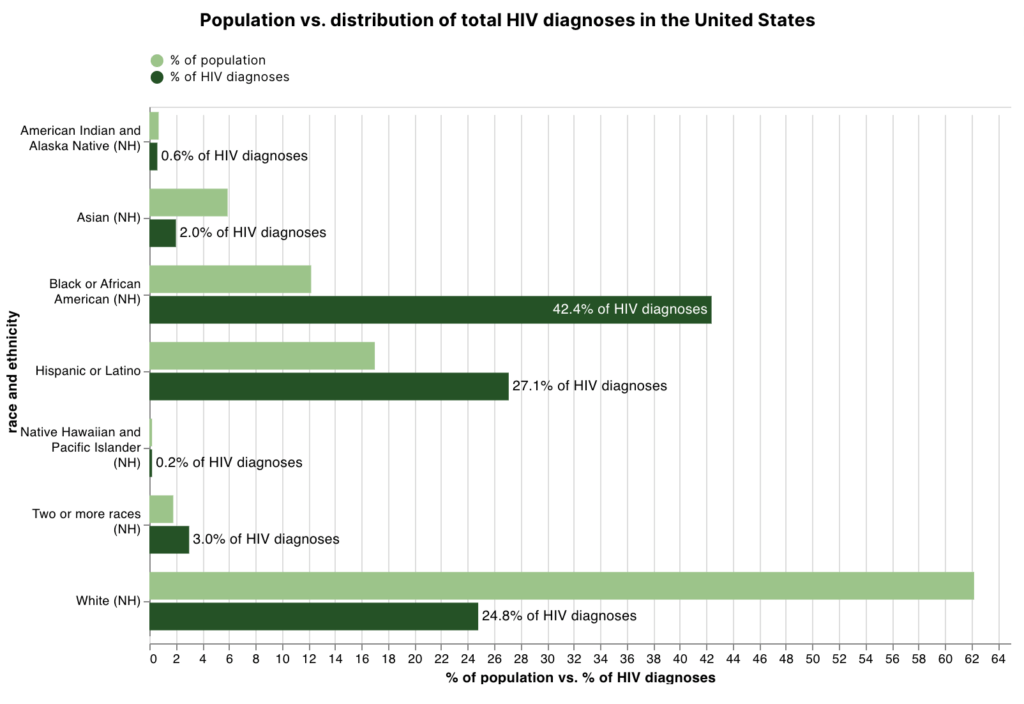
These numbers are staggering for any racial group and highlight the severity of health disparities experienced by Blacks/African Americans in the nation. As we acknowledge National Black HIV/AIDS Awareness Day (NBHAAD) today, it is a testament of efforts to raise awareness on the disproportionate impact of HIV on Black Americans. We use this opportunity to stress the necessity for improved access to HIV education, testing, treatment, and prevention services. This is of particular importance as Black Americans exhibit high levels of medical mistrust, including HIV conspiracy beliefs, mistrust around HIV’s origin and treatment1, HIV-related stigma and homophobia2, and the sheer experience of outright discrimination.
At the Satcher Health Leadership Institute, at Morehouse School of Medicine, we focus on the need to explore and create information portals to display HIV data for all populations, and specifically on black and brown communities. In doing so, we are able to dismantle factors embedded within healthcare systems. We are also convinced that by focusing on the data we can identify structural outcomes of care that show discriminatory practices, whether they result from intentional or unintentional practices, behaviors and perceptions, implicit biases and policies which result in racial or ethnic differences in care that are not easily justified by patient preferences or clinical need3.
The dire need for equitable data in government, public and private sector for several diseases (including HIV) is evident. Racial and ethnic data in the American health care system is quite limited4. Additionally, the collection of readily available data at the city and community levels (especially in rural areas) is insufficient to meet the need.
As we navigate the journey toward tackling the HIV crisis within the black community, we recognize that the standardized collection of data on race, ethnicity, socio-economic status, among other factors, will be required at all levels throughout the U.S. Albeit, the inclusive and widespread implementation for the collection of complete patient data on all disease (HIV or otherwise) may likely take several years5. Therefore, ensuring that it is imperative to use validated techniques such as geo-coding and surname analysis via community engagement to move the needle in effective and sustainable solutions toward the HIV care continuum.
References
1. Bogart LM, Ransome Y, Allen W, Higgins-Biddle M, Ojikutu BO. HIV-Related Medical Mistrust, HIV Testing, and HIV Risk in the National Survey on HIV in the Black Community. Behav Med. Apr-Jun 2019;45(2):134-142. doi:10.1080/08964289.2019.1585324
2. Arnold EA, Rebchook GM, Kegeles SM. ‘Triply cursed’: racism, homophobia and HIV-related stigma are barriers to regular HIV testing, treatment adherence and disclosure among young Black gay men. Culture, Health & Sexuality. 2014/07/03 2014;16(6):710-722. doi:10.1080/13691058.2014.905706
3. Institute of Medicine (US) Committee on Understanding and Eliminating Racial and Ethnic Disparities in Health Care. Unequal Treatment: Confronting Racial and Ethnic Disparities in Health Care. 2003. Data Collection and Monitoring. https://www.ncbi.nlm.nih.gov/books/NBK220342/
4. National Research Council (US) Panel on DHHS Collection of Race and Ethnic Data. Eliminating Health Disparities: Measurement and Data Needs. . In: Ver Ploeg M, Perrin E, eds. The Role of Racial and Ethnic Data Collection in Eliminating Disparities in Health Care. National Academies Press (US); 2004. https://www.ncbi.nlm.nih.gov/books/NBK215740/
5. HIV and African American People (Centers for Disease Control and Prevention) (2020).
Data & Technology
Health Equity
HIV
Black HIV


.jpg)