Throughout American slavery and Jim Crow segregation, the Black church met the spiritual, social, economic, and physical needs of African Americans by providing resources that were systematically denied to Blacks as an oppressed group1. In contemporary society, it is estimated that almost 80% of African Americans self-identify as Christian and “more than half of all Black adults in the United States (67%) are classified as members of the historically Black Protestant church.”2,3,4 Given the historical role of the Black church in African American and Black diaspora communities, there remains a high expectation that the institution will continue to address their social, political and health concerns. However, this dynamic has been inconsistent as it relates to HIV.
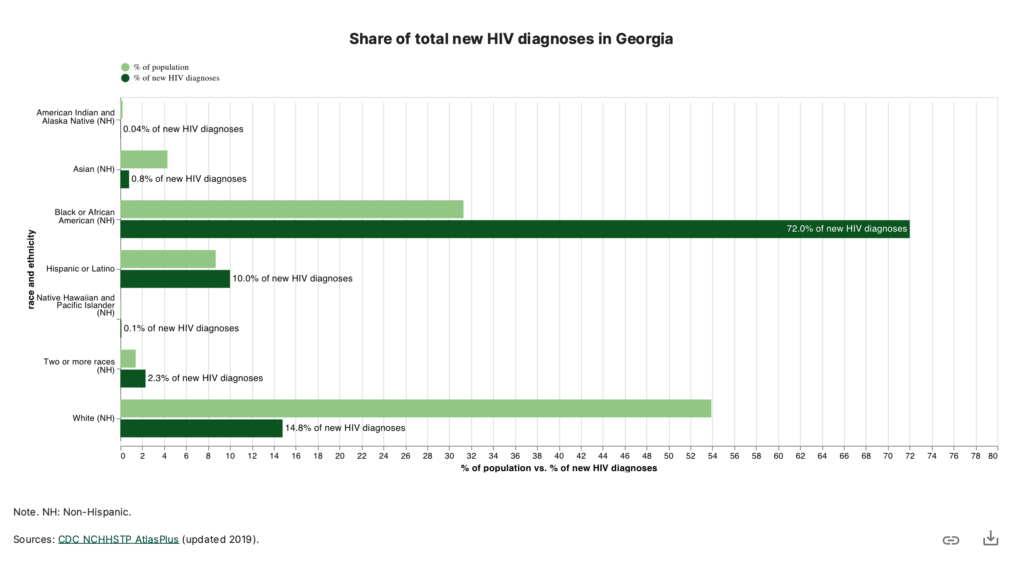
One in 16 Black men and 1 in 30 Black women are projected to be infected with HIV in their lifetime5. Despite the profound impact of HIV on the Black community, research suggests that the Black church has not devoted sufficient attention to HIV among its members6. Increasingly, Black churches have taken a more proactive outlook by ministering to the sick, the dying and the bereaved while focusing attention and sensitivity to the misunderstanding and hostility surrounding HIV and homosexuality7-9. This is particularly salient for African American gay and bisexual men (AAGBM)6 who experience high levels of homophobia, heterosexism, and stigmatization within Black churches10,11.
The Black church has a unique opportunity to contribute to the fight against HIV by leveraging its influence, resources, and community connections. However, there is strong tension between religious expectations that frown upon risk behaviors that may lead to HIV transmission, and the need to serve those who are at risk of HIV within the Black community in the United States (U.S). For many Black churches, risk behaviors that increase one’s chances of contracting HIV/ AIDS, including high-risk sex and drug use, are greatly stigmatized because such behavior is often considered taboo and contrary to biblical teaching of sin and immorality12. Indeed, the stigma of a positive HIV/AIDS diagnosis and homophobia experienced from Black churches is shown to decrease one’s coping capacity and significantly increase the experience of emotional distress13. Therefore, the support that many would expect from their faith institution becomes non-existent and even harmful.
Despite the historical and profound neglect of the Black church on supporting HIV prevention and treatment, recent data suggest that HIV prevention education, interventions, and screening are welcomed by some congregations and can be implemented quite feasibly in the Black church14. Given that the Black church and the discipline of public health often work in tandem to advance the health and wellness of Blacks in America, it is imperative that we accept that the Black church is and can be an even more formidable partner in HIV prevention6. Institutions such as Satcher Health Leadership Institute (SHLI) at Morehouse School of Medicine (MSM) in Atlanta, Georgia, and Xavier University College of Pharmacy (XUCOP) of New Orleans, Louisiana should continue engaging and expanding their collaborative efforts with Black churches. Combating the current HIV crisis will take an all hands on deck approach, especially in the U.S. South where HIV disproportionately affects African American populations.
References
- Lincoln CE, Mamiya LH. The Black church in the African-American Experience. Duke University Press; 1990.
- The Pew Research Center. About the Religious Landscape Study. The Pew Research Center, . https://www.pewresearch.org/religion/about-the-religious-landscape-study/
- Masci D, Mohamed B, Smith GA. Black Americans are more likely than overall public to be Christian, Protestant. The Pew Research Center The Pew Research Center 2018. https://www.pewresearch.org/fact-tank/2018/04/23/black-americans-are-more-likely-than-overallpublic-to-be-christian-protestant/
- Mohamed B, Cox K, Diamant J, Gecewicz C. Faith Among Black Americans. Pew Research Center Pew Research Center 2021. https://www.pewresearch.org/religion/2021/02/16/faith-among-black-americans/
- Hall HI, An Q, Hutchinson AB, Sansom S. Estimating the lifetime risk of a diagnosis of the HIV infection in 33 states, 2004-2005. JAIDS Journal of Acquired Immune Deficiency Syndromes. 2008;49(3):294-297.
- Jeffries WI, Sutton MY, Eke AN. On the Battlefield: The Black church, Public Health, and the Fight against HIV among African American Gay and Bisexual Men. J Urban Health. Jun 2017;94(3):384-398. doi:10.1007/s11524-017-0147-0
- National Research Council. The Social Impact of AIDS in the United States. The National Academies Press; 1993:336.
- Wooster J, Eshel A, Moore A, et al. Opening Up Their Doors: Perspectives on the Involvement of the African American Faith Community in HIV Prevention in Four Communities. Health Promotion Practice. 2011/09/01 2011;12(5):769-778. doi:10.1177/1524839910362313
- Nunn A, Cornwall A, Chute N, et al. Keeping the faith: African American faith leaders’ perspectives and recommendations for reducing racial disparities in HIV/AIDS infection. PloS one. 2012;7(5): e36172.
- Harris AC. Marginalization by the marginalized: Race, homophobia, heterosexism, and “the problem of the 21st century”. Journal of Gay & Lesbian Social Services. 2009;21(4):430-448. doi:10.1080/10538720903163171
- Valera P, Taylor T. “Hating the sin but not the sinner”: A study about heterosexism and religious experiences among Black men. Journal of black studies. 2011;42(1):106-122. doi:10.1177/00219347093563
- Baker S. HIV/AIDS, Nurses, and the Black church: A Case Study. Journal of the Association of Nurses in AIDS Care. 1999/09/01/ 1999;10(5):71-79. doi:https://doi.org/10.1016/S1055-3290(06)60344-0
- Balaji AB, Oster AM, Viall AH, Heffelfinger JD, Mena LA, Toledo CA. Role flexing: how community, religion, and family shape the experiences of young black men who have sex with men. AIDS patient care and STDs. 2012;26(12):730-737. doi:10.1089/apc.2012.0177
- Weeks FH, Powell TW, Illangasekare S, et al. Bringing evidence-based sexual health programs to adolescents in black churches: applying knowledge from systematic adaptation frameworks. Health Education & Behavior. 2016;43(6):699-704. doi:10.1177/1090198116633459
- Fuller TJ, Phillips NR, Lambert DN, DiClemente RJ, Wingood GM. Re-membering HIV in the Black church: women’s religious and social identity in relation to perceived risk and men on the down low. Culture, Health & Sexuality. 2022/03/01 2022;24(3):437-450. doi:10.1080/13691058.2020.1870000
HIV
Black HIV
Mental and Behavioral Health
Data & Technology
Health Equity
Religion
.jpg)