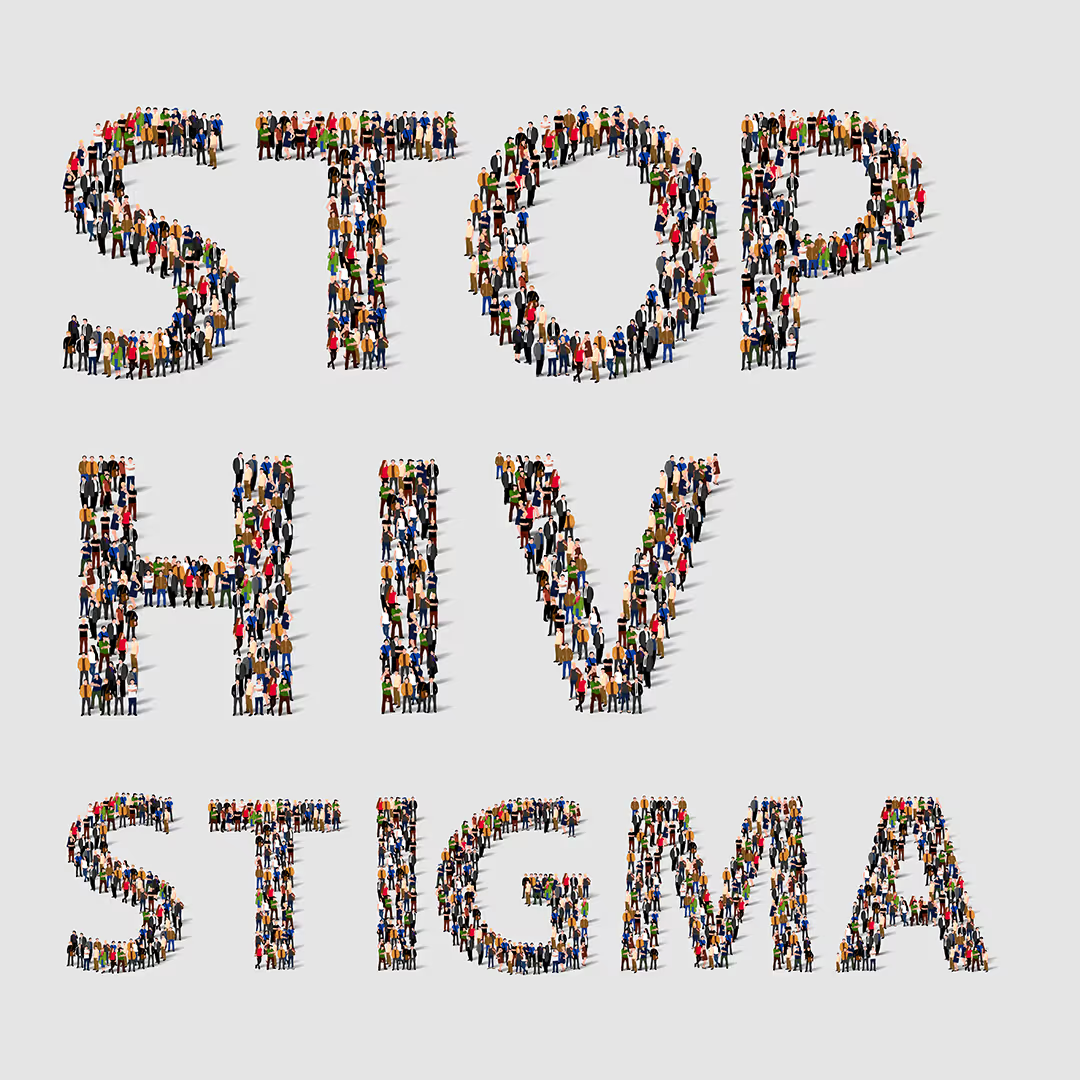
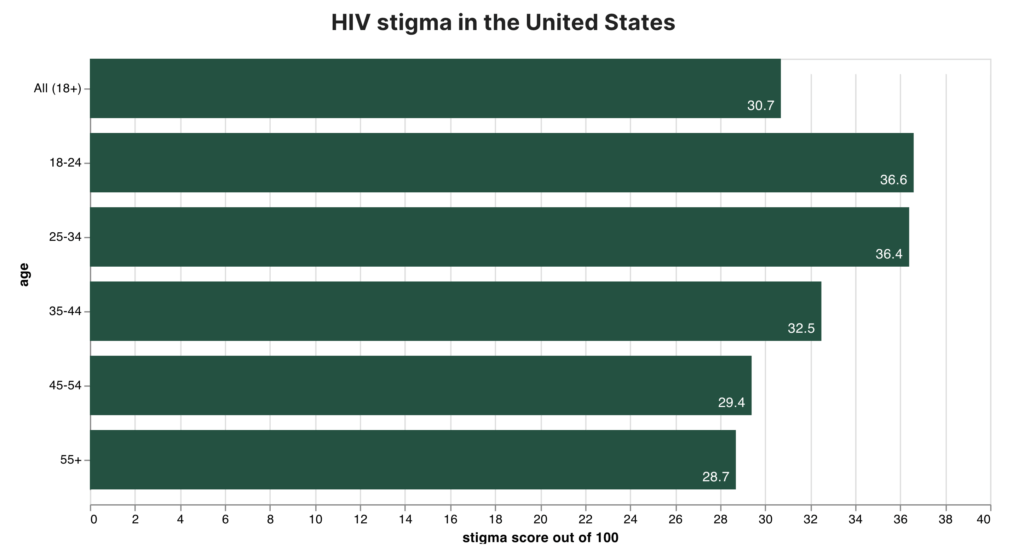
Zero HIV Stigma Day is a powerful global observance aimed at challenging the impact of HIV-related stigma, promoting awareness, and uniting communities to take action. In our efforts to combat HIV stigma, it's essential to have reliable and up-to-date data that sheds light on the prevalence of stigma and its effects. The Health Equity Tracker is an exceptional resource that empowers us to celebrate Zero HIV Stigma Day with knowledge, understanding and a commitment to eradicating stigma. Check out our data on HIV Stigma in the United States.
Understanding HIV Stigma
HIV stigma refers to the negative attitudes, prejudices, and discrimination faced by individuals living with or at risk of HIV. Stigma can lead to fear, ignorance, and a lack of empathy, hindering progress in HIV prevention, care, and support efforts. As we stand united on Zero HIV Stigma Day, it is crucial to be well-informed about the prevalence and implications of HIV stigma, and the Health Equity Tracker provides us with precisely that.
The Power of Data
Data plays a vital role in shaping effective strategies to combat HIV stigma. The Health Equity Tracker offers a wealth of data-driven insights, enabling users to explore and understand the prevalence of stigma across different demographics, geographic regions, and communities. The platform presents data in a readily accessible and interactive manner, making it an excellent resource for individuals, organizations, and policymakers working to eliminate HIV stigma.
Key Features of the Health Equity Tracker:
- Comprehensive Data: The Health Equity Tracker compiles data from various sources and organizations to provide a comprehensive overview of HIV stigma globally. By exploring the data, users can begin to learn the challenges faced by individuals living with HIV and the communities affected by stigma.
- User-Friendly Interface: The platform's user-friendly interface allows users to navigate and explore data effortlessly. It presents information through interactive charts, graphs, and maps, making complex data accessible to everyone.
- Intersectional Analysis: One of the most remarkable aspects of the Health Equity Tracker is its ability to perform intersectional analysis. It allows users to examine how HIV stigma intersects with other factors like race, ethnicity, gender, and sexual orientation, providing valuable insights into how stigma impacts marginalized communities disproportionately.
- Timely Updates: The Health Equity Tracker regularly updates its data, ensuring users can access the latest information. This dynamic approach helps inform real-time interventions and strategies to combat HIV stigma effectively.
As we observe Zero HIV Stigma Day, let us recognize the power of data and information in our fight against HIV-related stigma. The Health Equity Tracker is a valuable resource that empowers us to understand the prevalence of stigma and its impact on individuals and communities worldwide. Armed with this knowledge, we can work together to challenge stigma, promote empathy, and create a world where we treat people living with HIV with dignity, respect, and understanding. Let us celebrate Zero HIV Stigma Day by embracing the Health Equity Tracker's insights and renewing our commitment to a future free from HIV stigma.
We stand with LGBTQ communities everywhere and against all forms of discrimination. We see you and value your lived experiences because we are all in this TOGETHER! Support others and #StopHIVStigma. Learn more: cdc.gov/StopHIVTogether
The Health Equity Tracker, established in 2020 during the COVID-19 pandemic, collects current demographic data from heavily impacted communities. It offers insights into health outcomes based on race, ethnicity, sex, and other crucial factors, aiding policymakers in identifying necessary resources and support for affected communities' improvement. Speak up about health equity! Share your narrative and help raise awareness. We would love to hear from you!
Awareness
HIV
Health Equity
HET Updates




.jpg)