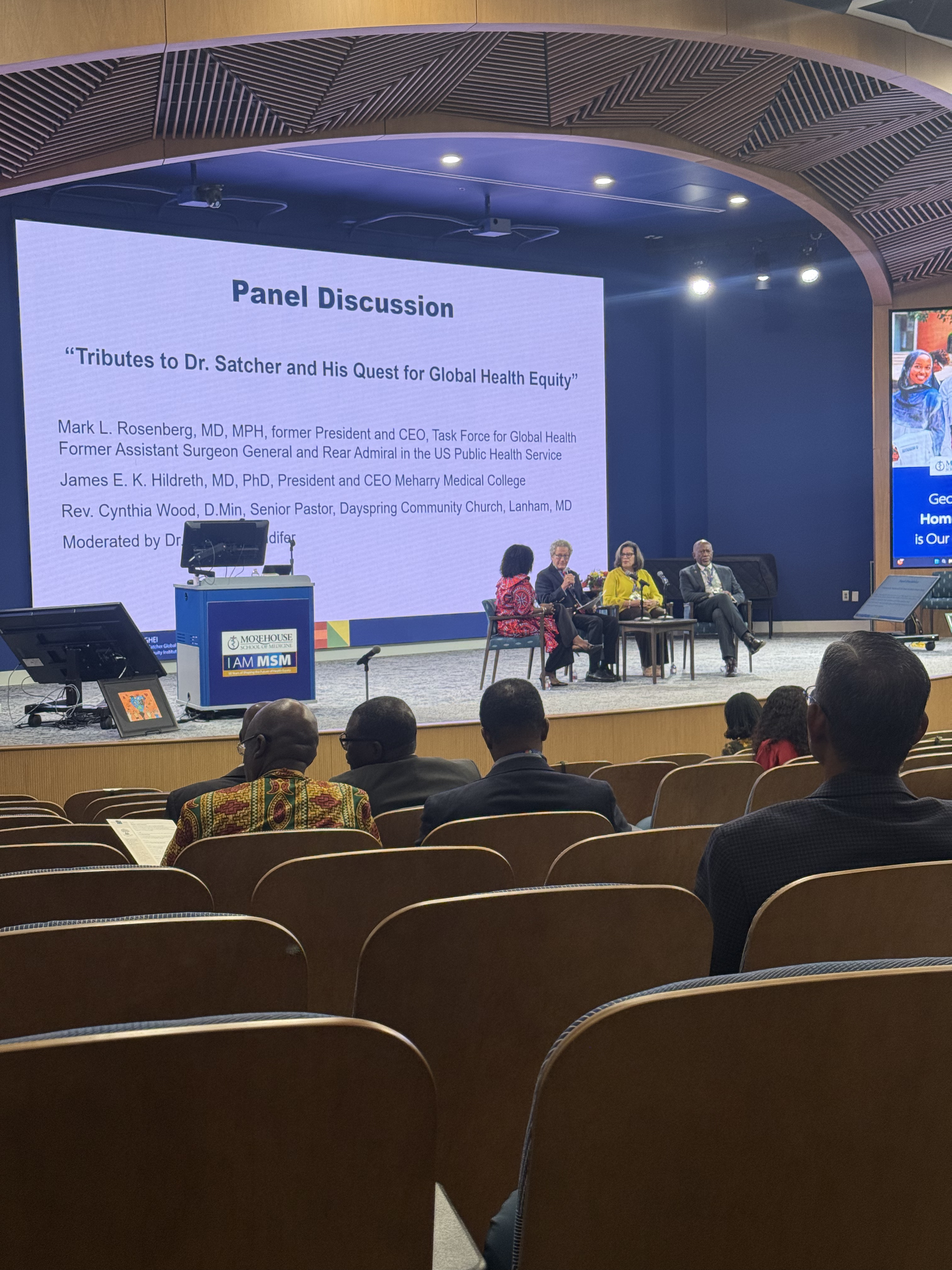
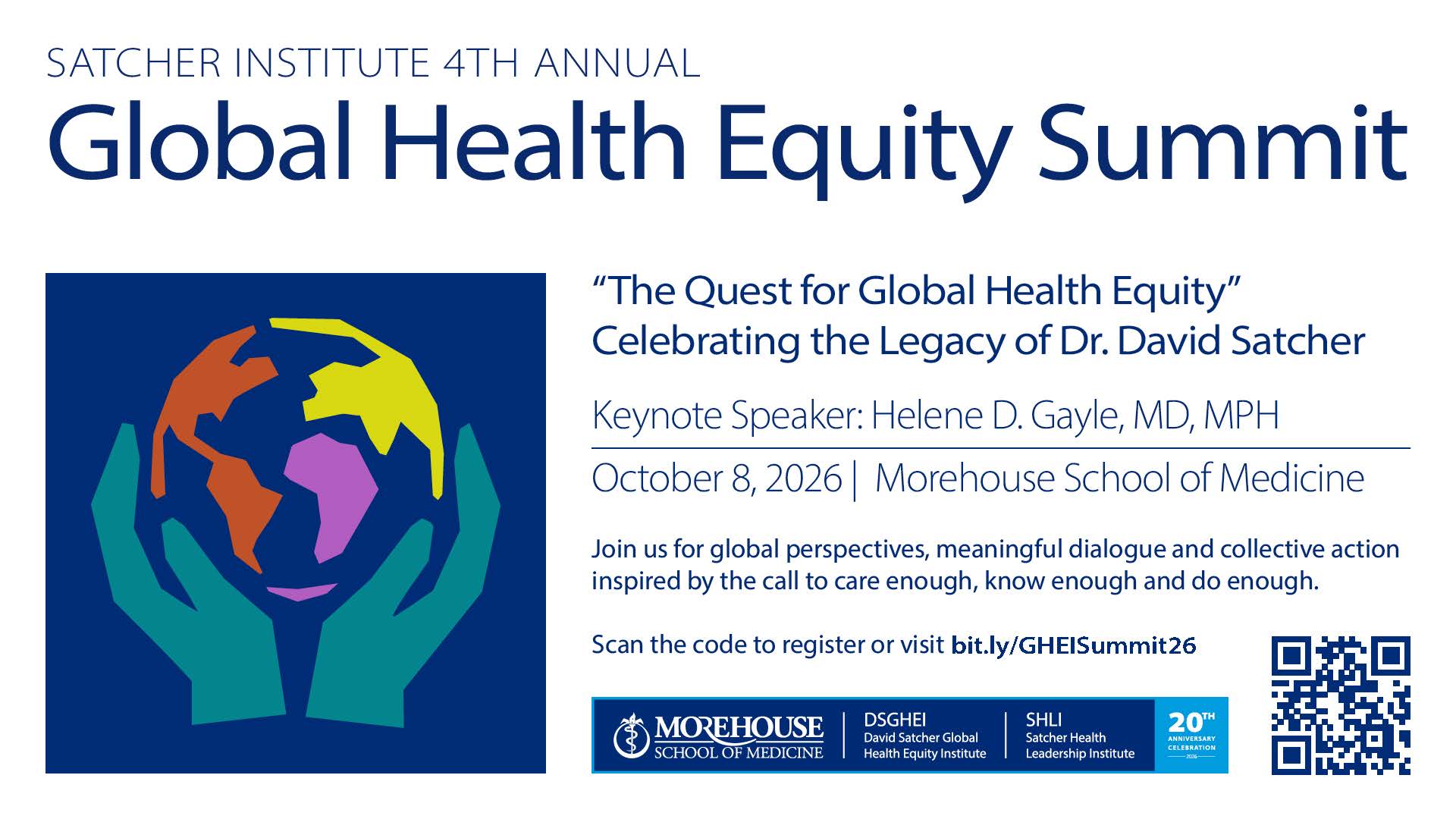
On October 8th, I attended the Fourth Annual Global Health Equity Summit at Morehouse School of Medicine. The summit brought together physicians, researchers, public health leaders, and students for a full day about what global health equity looks like in practice. Running through all of it was one theme: the legacy of Dr. David Satcher.
The day opened with a keynote from Dr. Helene D. Gayle, former President of Spelman College. Her message was aimed straight at the students in the room: keep going. These are hard and uncertain times for public health and medicine, and she reminded everyone that perseverance isn't optional. It's part of the work. I needed to hear that, and I could tell a lot of the students did too.
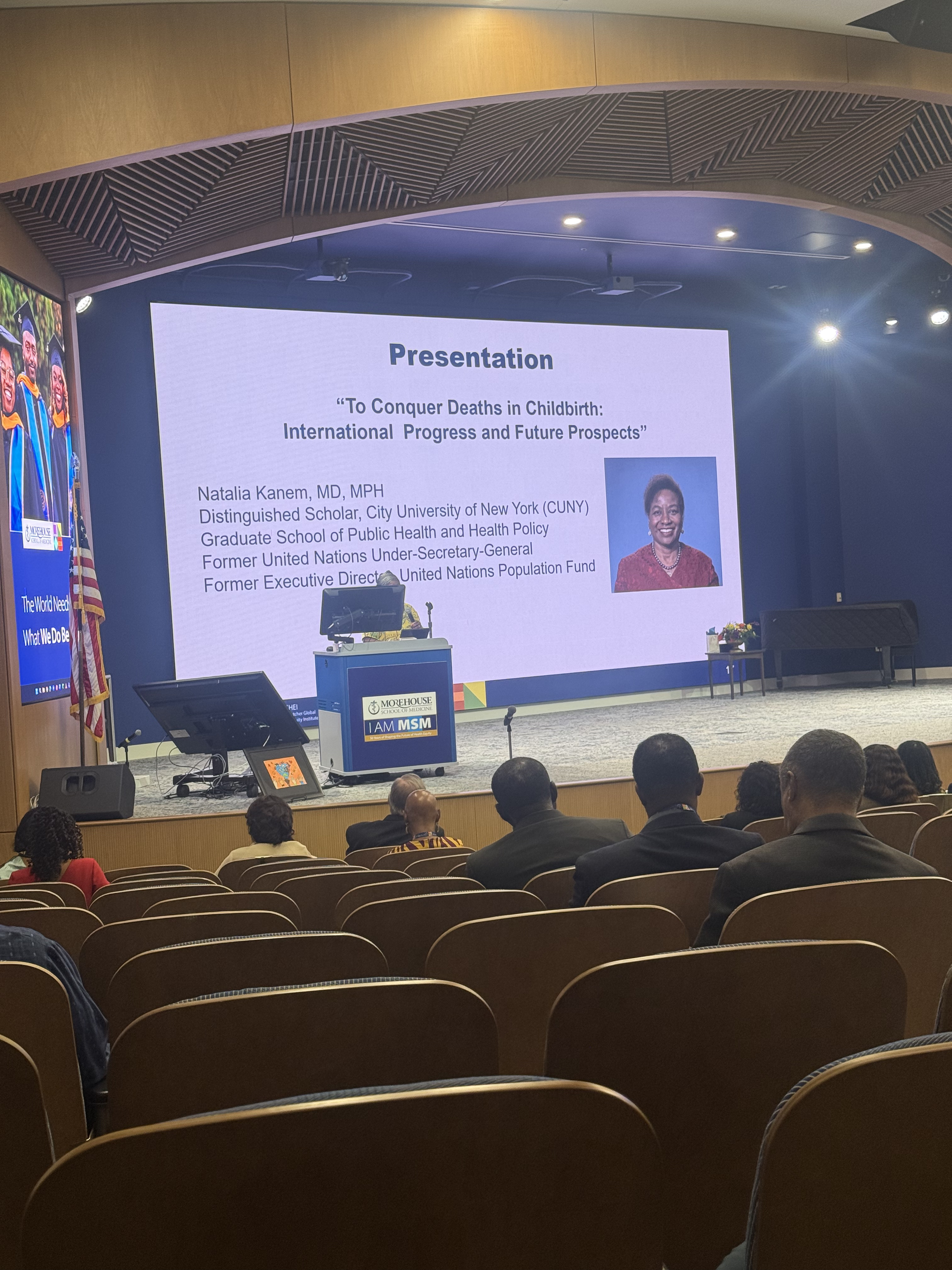
Dr. Natalia Kanem, Distinguished Scholar at the City University of New York Graduate School of Public Health and Health Policy and former head of UNFPA, gave one of the most powerful talks of the day, on maternal mortality. She walked through the five major complications behind about three-quarters of deaths in pregnancy and childbirth: severe bleeding, infection, preeclampsia and eclampsia, complications from delivery, and unsafe abortion. She pointed out that unsafe abortion often goes unspoken because the death report will just say "hemorrhage" or "infection." She also reminded us that in the United States, Black women die in childbirth at about twice the rate of the general population, and that the U.S. is nowhere near the top 10 countries for low maternal mortality.
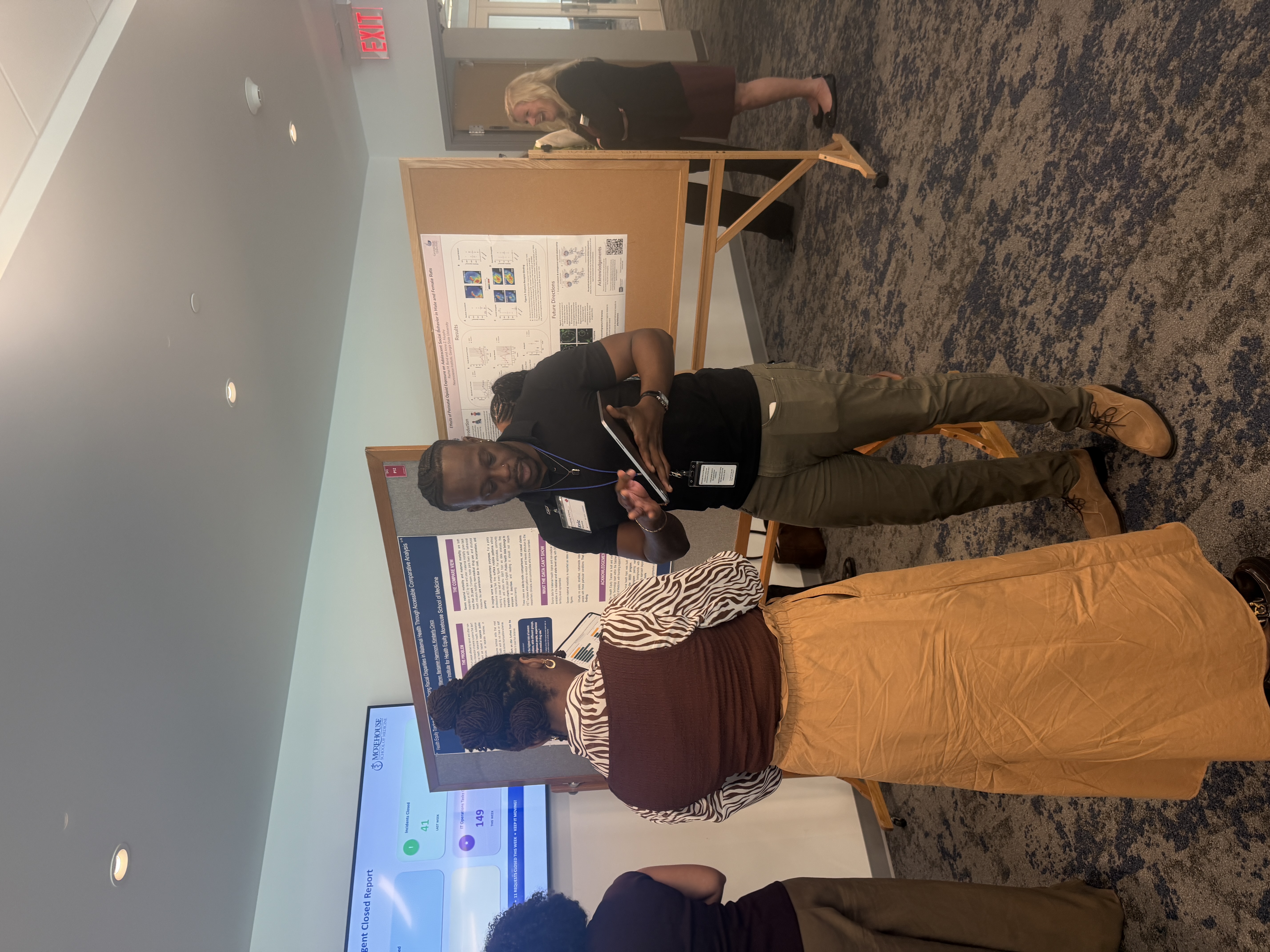
What hit home for me most was what she said about data. She called data "one of the arrows in the quiver" and told the students that following data trends is a big part of what makes you smart: "You need to understand what happened yesterday in order to know what's going to happen the day after tomorrow." Then she warned that the datasets we use to track maternal deaths are under threat as funding gets pulled. She also highlighted countries like Brazil, Colombia, and Suriname that now collect maternal mortality data broken down by race and ethnicity. As someone who works on the Health Equity Tracker, I felt that one personally. Disaggregated, freely available data isn't a nice-to-have. It's how we see who is being left behind. She closed with words I keep thinking about: where you're born shouldn't decide whether you get to live a healthy life.
Dr. Solomon Ofori-Acquah, Georgia Research Alliance Eminent Scholar, Director of the Solve Sickle Cell Initiative, and professor of pediatrics at MSM and Emory, spoke about Dr. Satcher's legacy and mental health. He asked a question that changed how I think about health systems: what if what we call a patient's "failure to engage" is really a system's failure to become engaging? He argued that access alone isn't enough. People also need to feel safe, feel heard, and take an active part in their own care. He named fragmentation as the mechanism behind much of what goes wrong in our systems, and he pointed to Dr. Satcher's deep listening as a medical student as a model for all of us. His closing line stuck with me: "Treatment becomes care when the person receiving it becomes an active participant in it."
Throughout the day, speaker after speaker came back to Dr. Satcher, his humility, his mentorship, and the "Satcher babies" who survived because of his work. They also kept telling the students the same thing: bring your whole self into medicine. Your background, your culture, and your perspective aren't something to leave at the door. They're part of your expertise.
Leaving the summit, I kept thinking about how this connects to what we build. Dr. Kanem's warning about vanishing data and Dr. Ofori-Acquah's call to move from contact to connection point the same way. Tools like the HET only matter if the people and communities they're meant to serve can trust them and actually use them. Access is the starting point, not the finish line.
Dr. Satcher's legacy is a challenge to keep going, keep listening, and keep building systems worthy of the people they serve. I left the summit ready to take that on.
Health Equity
HET Updates
Data & Technology
Events
Mental and Behavioral Health
.jpg)